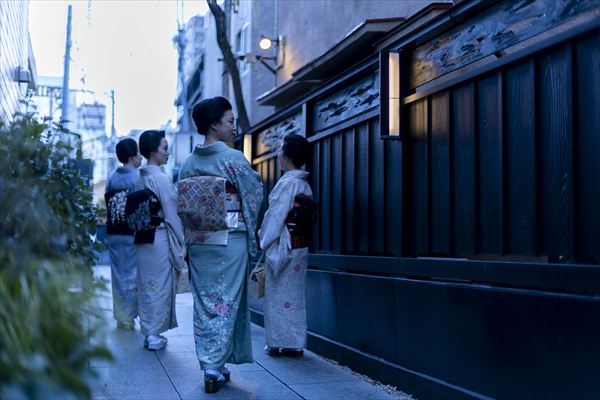
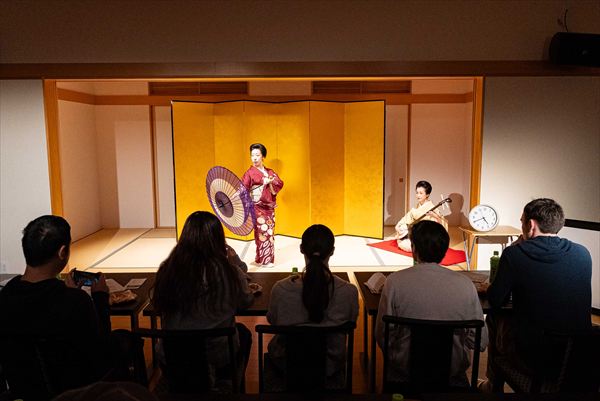
During the Edo period, Hachioji flourished as a post town along the Koshu Kaido and served as a key transportation hub for merchants and travelers from across the country.Against this backdrop of constant activity, geigi houses (okiya) and traditional restaurants were established in the early Meiji period, giving rise to Hachioji’s distinctive kagai culture.The present-day Hachioji kagai, symbolized by the black wooden fences that remain in the Nakamachi area, is known as the only surviving kagai in the Tama region.From the Taisho period through the postwar era, it flourished alongside Hachioji’s growth as a “city of textiles,” becoming a lively and vibrant district.The Hachioji geigi who perform here are designated as part of the Japan Heritage site “Reiki Manzan Mount Takao – Stories of Sōto,” and through traditional songs and dances, they continue to pass on the history and culture of Sōto (Hachioji) to the present day.In 2022, “Sōto Terrace” was developed as a base for exploring the kagai district and promoting local history and culture.