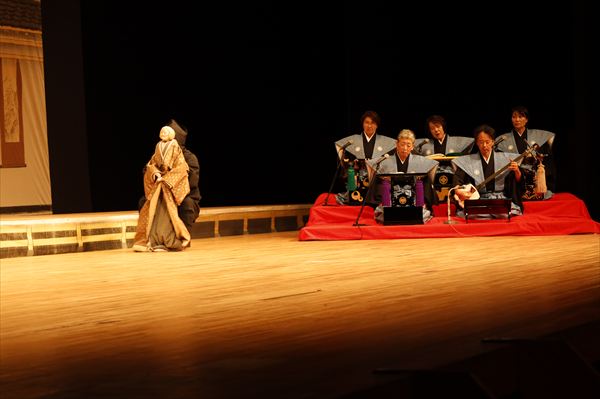
Sekkyobushi (Sekkyo Joruri) originated as a form of narrative performance used to convey Buddhist teachings in an accessible way. Over time, it developed into a popular performing art by incorporating various musical elements and puppet expressions.In the late Edo period, it was revived by the first Satsuma Wakadayu and later spread throughout the Tama region.Sekkyobushi was used as narrative chanting in performances such as utsushi-e (magic lantern shows) and Kuruma Ningyo puppet theater, and it spread while becoming closely connected with local performing arts.Until around the early Showa period, it was enjoyed as a familiar form of entertainment among young people in rural communities and was passed down as a regionally rooted art form.The “Sekkyobushi no Kai,” an organization dedicated to preserving this tradition, is designated as a holder of Tokyo Metropolitan Intangible Cultural Property. In addition to public performances, the group engages in training and research on old scripts, working to preserve and pass on Sekkyobushi, which has long been loved and enjoyed in Hachioji and the wider Tama area.